
In 1970, philosophy was caught in an intellectual drift. Logical positivism, the branch developed by the Vienna Circle, drawing on the work of Bertrand Russell and Ludwig Wittgenstein, had crumbled under attack from Wittgenstein himself and the American philosopher Willard V. O. Quine. It was emptied of content and reduced to merely cataloguing language.
Enter Saul Kripke. In the spring of 1970, he took the lectern at Princeton to deliver three lectures that would become his landmark book, Naming and Necessity. The logical positivists claimed that there were only two kinds of meaningful statements: those whose truth depends on definition as in mathematics (analytic), and those whose truth can be confirmed by observation, as in the empirical sciences (synthetic). Everything else – talk of ethics, metaphysics and so on – was a meaningless echo from a previous, less enlightened age.
By the outbreak of the Second World War, however, Wittgenstein was dismantling the concepts that had inspired their programme, while Quine was dissolving the analytic-synthetic distinction on which their philosophy rested. Quine argued that “meaning” itself was an artifice, so that philosophy was continuous with the empirical sciences.
Kripke offered a new perspective. The Vienna Circle, he argued, had blurred the line between epistemology and metaphysics – between how we know things and what those things are. Similarly, Quine's powerful attack on the analytic-synthetic distinction, he claimed, rested on a certain confusion between linguistic and metaphysical notions. Kripke aimed to untangle those confusions and show that philosophy could not be reduced to a study of language.
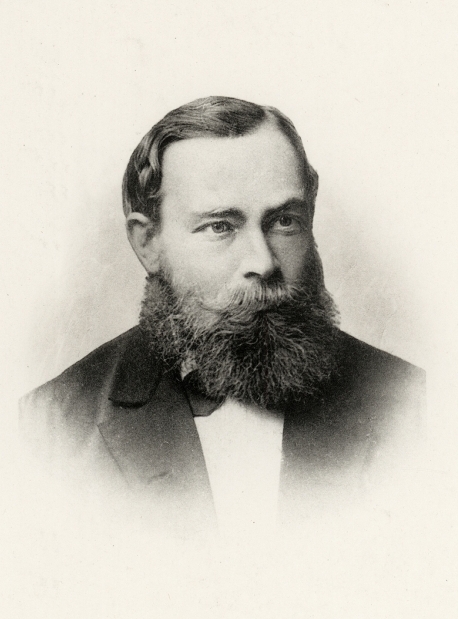
He began the first lecture with a disarmingly simple question: What makes a name refer to the thing it names? The name “Aristotle”, for instance, seems to single out the ancient philosopher rather than one's neighbour – but why? Since the mathematical approaches of Gottlob Frege and Russell, philosophers had treated names as disguised descriptions; for example, “Aristotle” was short for, say, “the teacher of Alexander the Great”. Kripke showed that this view could not be right. He asked, if Aristotle had never actually taught Alexander, would we not still be referring to the same man when we used his name? It seems we would. Therefore, a name does not describe; rather, it designates an object in the world. Hence, there is a world of “real” objects to designate that exist independently of our linguistic practices. Thus, metaphysics – the study of these objects – is a meaningful subject and philosophy is not merely a record of linguistic practices.
This insight is pertinent for today's debates about AI. According to Kripke, objects acquire their names through an initial “baptism” – an act of pointing to or otherwise identifying the intended bearer. The name passes from speaker to speaker through a causal-historical chain of people using the name “intending to preserve the reference”. But large language models such as Claude or ChatGPT generate the sequence of letters “Aristotle” only through statistical regularities among tokens on a server. There is no apparent intention behind it. It follows that they do not participate in the causal-historical chain of reference, raising the question of what, if anything, is meant when they employ a name. This question lies at the heart of understanding their linguistic and cognitive capacities.
In the second Princeton lecture, Kripke argued that there are truths that are at once empirical and necessary – facts that we discover through experience, but that could not have been otherwise. When scientists identified heat with molecular motion, they did not uncover a contingent fact about our use of words, but a necessary truth about the world: wherever there is heat, there is molecular motion, for that is what heat is. This point may seem esoteric, but it sets up his crucial third lecture.
In that final lecture, Kripke turned to the mind. The prevailing doctrine of the 1960s held that, just as heat was molecular motion, the feeling of pain was nothing more than one's C-fibres firing. But, for Kripke, this analogy fails because we can coherently imagine pain without C-fibre activity – a being that feels pain through some other mechanism, or even without a nervous system at all. Therefore, unlike heat and molecular motion in the second lecture, pain is not necessarily C-fibre firing. But if we cannot currently exclude the possibility of pain in beings that lack C-fibres or other biological structures, it follows that, if Kripke is right, we cannot rule out the possibility that AI agents are experiencing pain and other emotions.
Half a century on, Naming and Necessity continues to shape philosophy: its new fiftieth anniversary edition, published last year by Wiley-Blackwell, reminds us how enduring Kripke's revolution has been. Of course, not everyone agrees with him, and the issues discussed are very much still alive today. Michael Dummett, for instance, the foremost interpreter of Frege of his age, regarded Kripke's account as brilliant but misguided. He thought the issues Kripke raised could indeed be resolved within the idea of names as descriptors, if one were sufficiently careful. Yet even for Dummett, Kripke's work served as a valuable corrective to the nihilistic tendencies in philosophy at the time. And Kripke, for his part, acknowledged Dummett's influence. In Reference and Existence (1973), based on his later John Locke lectures, he credits Dummett as one of his inspirations.
Kripke was only thirty when he gave the Naming and Necessity lectures. By the age of three, he had already asked theological questions about divine omnipresence; by nine, he had read all of Shakespeare and was wrestling with Descartes's Meditations; and by twelve, he had discovered Hume. Though Naming and Necessity is a key moment in the history of philosophy, Kripke's first major achievement came while he was still at school. At eighteen, a student at Omaha Central High, he published “A Completeness Theorem in Modal Logic” in the Journal of Symbolic Logic – a paper that transformed the field and established the formal framework that underpins much of modern logic and computer science.
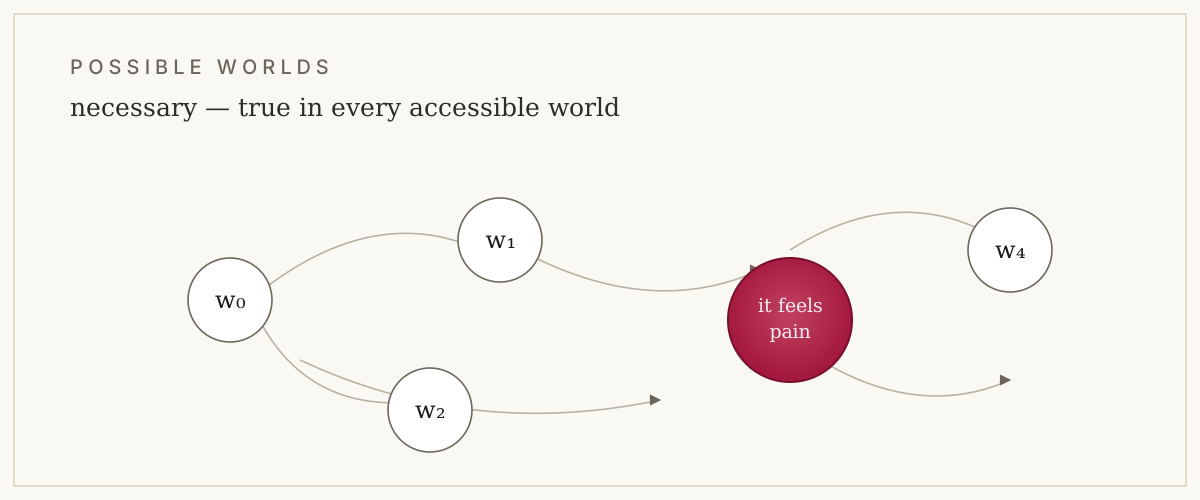
The notion of modality – of different “modes” of truth, such as truth in the past, necessarily true or believed facts – has been a source of philosophical difficulty since Aristotle. For centuries, thinkers struggled to give these ideas a precise formal expression. At eighteen, Kripke developed a mathematics of “possible worlds” that structured how different imagined realities (“worlds”) sat together in one system called a frame. In the possible-worlds interpretation, a statement is true in each world if it holds there; it is possibly true if it holds in at least one world accessible from it in the frame; and it is necessarily true if it holds in every accessible world. This elegant mathematical framework transformed the study of logic. When we consider counterfactuals or the past, or when an autonomous system evaluates what it knows, we are exploring Kripke's possible worlds.
After his teenage triumph, Kripke was invited by Harvard to apply for a teaching post, but his mother demanded that he finish high school first. He never earned a doctorate, taking only a bachelor's degree in mathematics from Harvard, yet went on to receive the prestigious Rolf Schock prize, along with numerous honorary degrees. Colleagues remember him as dazzlingly intelligent but endearingly absent-minded. During one seminar in a room where he had lectured before, he was seen crawling across the central table to retrieve an umbrella he had left behind. He later explained, with perfect sincerity, that he had wanted “to be inconspicuous”.