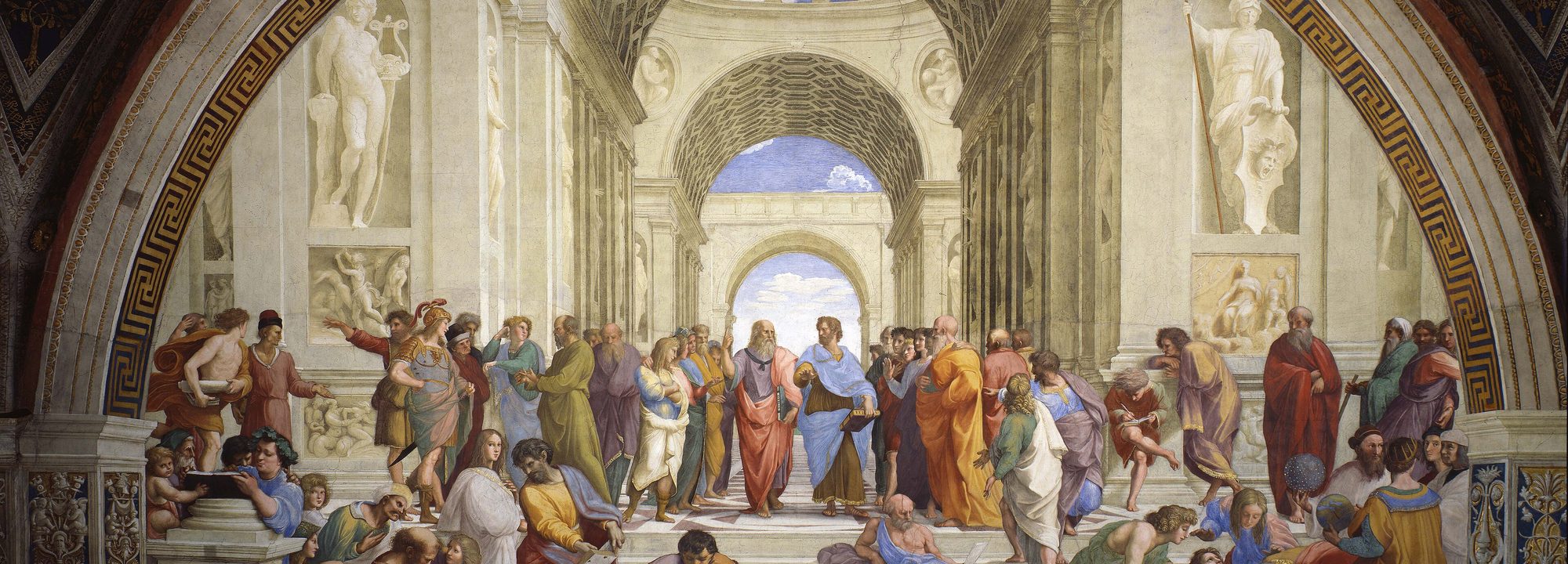
For some, the word “logic” suggests the sterile precision of computers – paragons of cold calculation, untouched by human feeling. The defining quality of Spock in Star Trek. For others, it is the pastime of philosophers, mathematicians, scientists and other pedants. But properly understood, logic is simply the science of reasoning. It is what gives one argument weight over another – whether at a cabinet meeting, in a pub debate or in the cloisters of a mathematics department.
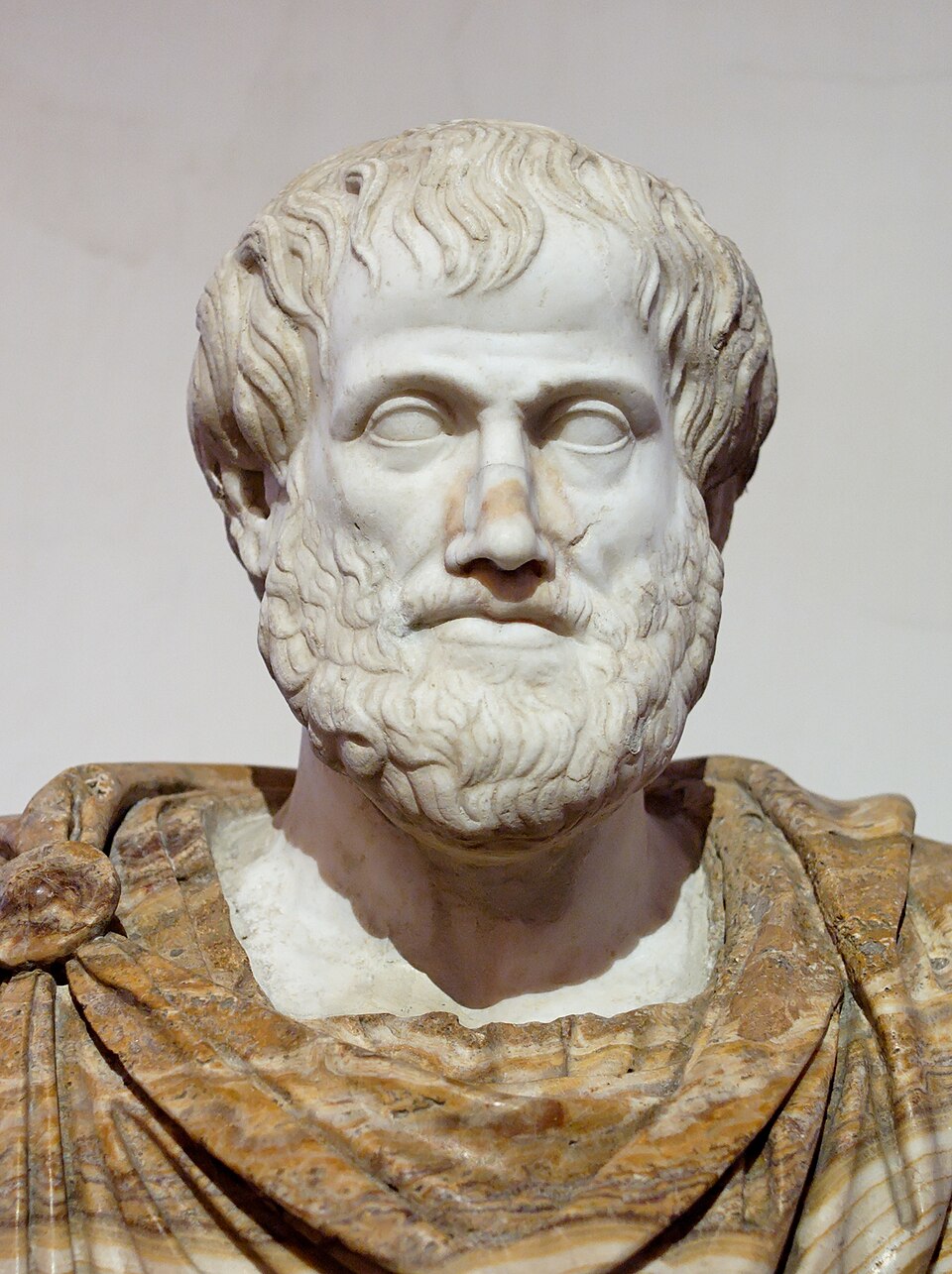
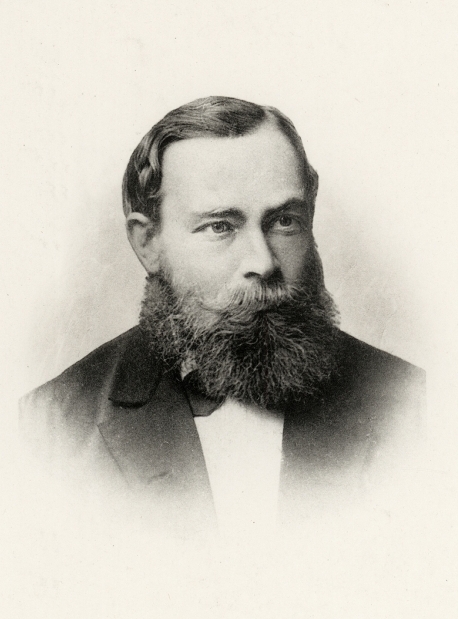
Aristotle laid the groundwork for logic more than 2,000 years ago in his Organon, a collection of six works that established some basic laws of reasoning (the word “organon” being Greek for “instrument”). However, his development of the subject was limited – presumably because he was also busy founding disciplines such as biology and ethics. About 150 years ago, “logic” experienced a kind of sudden rebirth, primarily due to Gottlob Frege, but also with the help of notable figures such as the philosopher Bertrand Russell and the mathematician David Hilbert.
This renaissance of logic was driven by questions surrounding the nature of mathematics as it had developed during the Enlightenment. In the ancient world, mathematics had largely concerned explicit constructions of geometric shapes using a straightedge and a compass; even numbers were expressed in terms of the ratio of such lines, rather than as abstract things. However, in the seventeenth and eighteenth centuries – thanks to figures such as Isaac Newton and Gottfried Leibniz – mathematics increasingly began speaking about abstract entities such as infinity. Since one cannot construct an infinity, in what sense does it exist and what rules govern it? The infinitesimal calculus today forms the backbone of science.
The concern over the metaphysics of mathematics eventually opened onto a deeper enquiry: when is it valid to call something true? For example, is the statement “2 + 2 = 4” true because it corresponds to some platonic realm of numbers or because we have a rule-governed practice that entitles us to assert it? Are moral claims such as “slavery is wrong” true in the same sense as “the Earth orbits the Sun”? On this, the academic community resembles a synod in schism. The orthodox tradition says that language is a kind of watered-down mathematics. An argument is valid when it is played like a game of chess, with the rules being the “laws” of logic. This is the dominant view and was developed by the founders of modern logic (Frege, Russell and Hilbert) because it suited their end of justifying mathematics.
The heterodox tradition, by contrast, sees language as a lived social practice. This is the view advanced by thinkers such as Martin Heidegger, Charles Peirce and the later Ludwig Wittgenstein. On this view, there is no rulebook for reasoning; rather, it is understood as the practice of giving and evaluating reasons – the model used in courtrooms, parliaments and comment sections on the internet. This picture presents a wonderfully collaborative, democratic view of language, truth and logic. But now ask yourself: would you cross a bridge if you knew that the engineers who built it had performed their calculations by a Facebook debate? Probably not. Much better to have arrived at their conclusions through the correct application of prescribed rules by, say, using a calculator.
The orthodox and heterodox traditions have typically been pursued separately, often even antagonistically, as they differ in fundamental – and seemingly irreconcilable – ways. While this may sound like an arcane debate (“How many angels can dance on the head of a pin?”), the issues are anything but trivial. First, questions around the nature of justice, identity and consciousness lie at the heart of contemporary political and cultural discourse. But how can we meaningfully engage with such questions without grounding them in language, truth and logic? Second, with the rise of artificial intelligence and our growing dependence on it across both society and the economy, the question of when to apply the orthodox model of reasoning and when the heterodox becomes increasingly concrete: a medical AI diagnosing cancer might demand the precision of mathematics; an AI moderating content or making parole recommendations arguably requires the capacity to reason with contestable norms.
This is the context in which Reasons for Logic, Logic for Reasons by Ulf Hlobil and Robert Brandom situates itself. It is a bold attempt to solve the dichotomy of the two traditions by redefining entirely what logic is about and what it needs to do. The authors argue that previous efforts fall short because they spoke pragmatically (ie in the heterodox way) about ordinary English, but continued to do logic in a separate, mathematical register (ie in the orthodox way).
For example, the mathematical statement “2 + 2 = 4” is true because it follows from the definitions of the terms involved. No new thought or discovery could ever overturn it. By contrast, if the members of a jury decide that someone is guilty of a crime, they do so on the basis of the arguments presented. Were new evidence later to emerge – an alibi, a confession, a faulty test – the once compelling argument for conviction might collapse. Hlobil and Brandom contend that “logic” ought to be able to explain both situations without bias. To this end, they claim to have built an alternative account of the subject that better represents how it is actually used in daily life.
The radical move in Reasons for Logic, Logic for Reasons is to propose a position that the authors call logical expressivism, in which logic is not about adjudicating reasoning – instead, it is a means of articulating, explaining and describing reasoning. In other words, on this account, logic is descriptive about how people reason, but not normative. The authors summarize this new position with the slogan “logic is not a canon, but an organon of reason”.
The book is both conceptually ambitious and structurally intricate – a remarkably capacious work. The bibliography alone is an education, and the technical chapters are studded with deft asides that situate the authors' proposals within the broader sweep of modern logic. While the breadth is never gratuitous, as it serves the central thesis, the prose is dense and academic. To deliver such a wide-ranging project, each chapter is marked by its author and is distinguished by tone and purpose: Brandom develops the philosophical architecture and Hlobil provides the mathematical furnishings. However, the shift in style can at times be abrupt: Brandom's historical and metaphysical prose gives way to Hlobil's lean formalism.
The undercarriage of the book is a position Brandom has long championed: inferentialism. With roots in the work of Wittgenstein, Wilfrid Sellars, Michael Dummett and others, inferentialism is a position outlined by Brandom in Making It Explicit (1994), which argues that the meaning of a sentence is given by the role it plays in a web of justifications (rather than, say, concepts of truth).
At a World Logic Day event at University College London in 2022, the Swedish philosopher Tor Sandqvist offered what has become a canonical example of the difference between the old way of thinking about meaning and the new, inferentialist account: what does the statement “Tammy is a vixen” mean? The traditional answer is that there exists a set of things in the world that we refer to as “vixens”, and “Tammy” is one of them. While sensible, this approach has a small flaw: despite ostensibly giving the “meaning”, it doesn't explain the words such that a person who didn't know how to use the phrase would now understand it.
Suppose instead that a child were to ask you what it means to say “Tammy is a vixen”. How might you answer them? Probably not by talking about abstract sets of objects. More likely, you'd say it means “Tammy is a female fox”. Pushed for clarification, you might explain that from being told that Tammy is a vixen, we may infer that she is both female and a fox. Conversely, if we know both those facts about her, then we may indeed assert that she is a vixen. Unlike the previous approach, this inferentialist account of the phrase's meaning enables our interlocutor to use it and to see what is required for it to be asserted.
To give a more emotive example, consider the claim “Tammy is a thief”. In uttering the phrase, one is not putting Tammy in a category, but rather asserting that she took someone else's property. Using the book's account of the meaning of such an accusation, it is clear what the prosecution would need to show in order to justify the truth of the claim.
Despite its expansive bibliography, Reasons for Logic, Logic for Reasons overlooks a significant body of recent work that is directly relevant to the inferentialist conception of logic. This is the discipline of proof-theoretic semantics, developed by figures such as Dag Prawitz, Dummett and Peter Schroeder-Heister in the past fifty years. It shares the inferentialist stance with Hlobil and Brandom, but is focused on explaining the currently known laws of logic rather than developing logical expressivism. The omission is striking, not because it undermines the book's argument, but because it suggests two parallel projects unaware of their proximity.
One hopes the strands will eventually converge. Do Ulf Hlobil and Robert Brandom succeed in their project? That remains to be seen. The book presents an impressive framework that seems to stand on its own terms, but they never illustrate it applied to real-world reasoning, whether in mathematics, legal theory or scientific enquiry. This is a philosopher's book. Nonetheless, their logical expressivism offers a genuinely novel understanding of what logic is about: rather than a set of rules governing reasoning, it is the instrument for making reasoning explicit.